Loading content…
The aviation uniform isn't just elegance — it's technical brand equipment, safety and authority. A complete guide for pilots, cabin crew and ground crews.
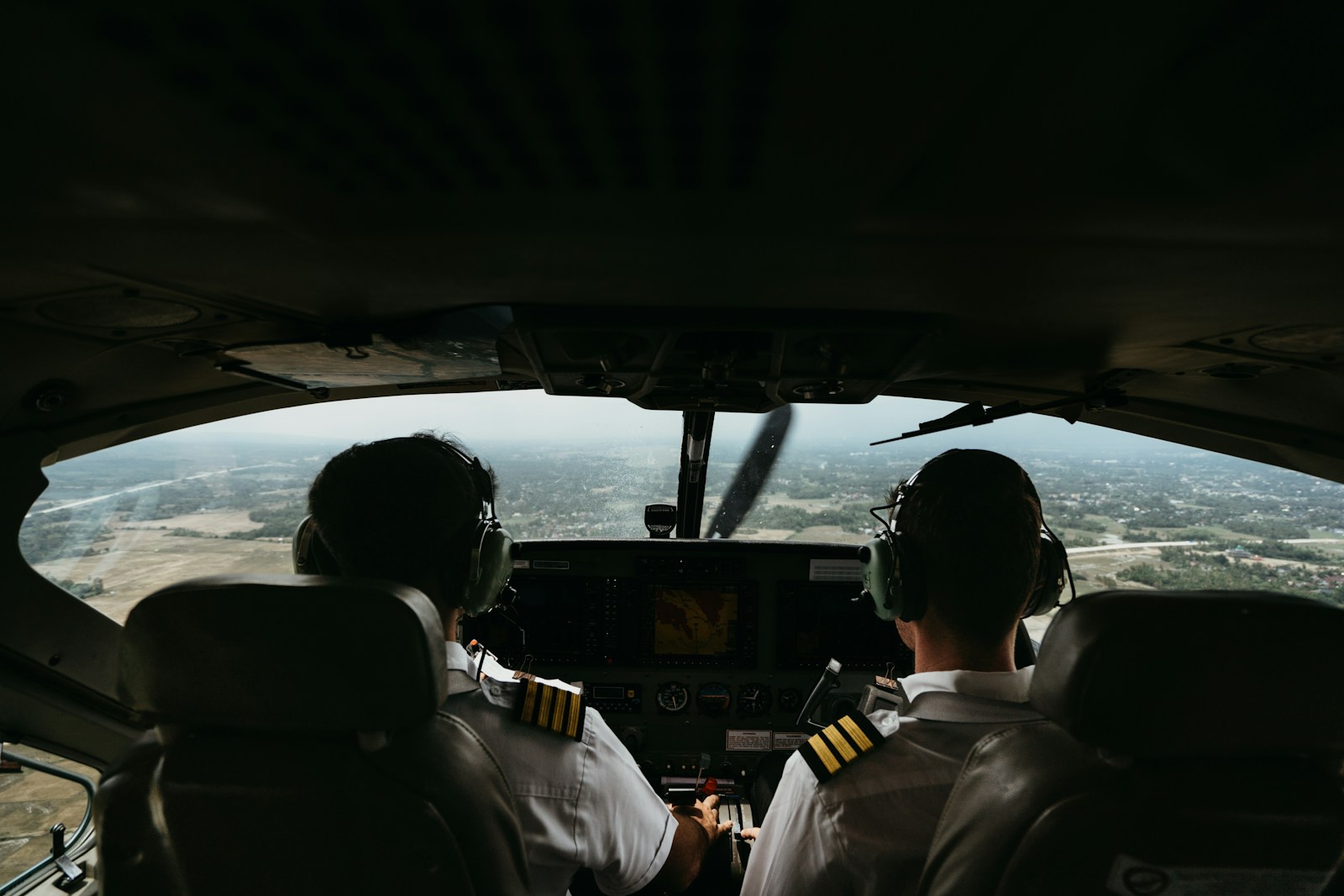
When a passenger boards an aircraft, the first person they see is dressed, literally, in the airline's brand. The stewardess at the door. The pilot standing next to the cockpit. The first officer preparing for the briefing. For 97% of passengers, their uniforms are the first direct point of contact with the company.
It's no coincidence that airlines invest more in a uniform than in any other element of the brand experience.
No other professional uniform combines, all at once:
A cabin crew uniform isn't a more elegant version of a service suit. It's technical equipment disguised as a garment.
Four stripes on the epaulette mean captain. Three, first officer. Two, second officer. The stripes aren't decorative; they're a communication system that works regardless of language, culture or visibility.
The fabrics need to withstand prolonged pressurisation, rapid temperature changes during stopovers, and the impossibility of ironing between flights. Cotton-polyester blends with anti-crease fibres are the standard.
The cut allows hours of seated work in the cockpit without painful creases. The shoes have non-slip soles for emergencies.
If the pilot's uniform communicates authority, the cabin crew's uniform communicates experience. It is, literally, the passenger's interface with the airline for the entire duration of the flight.
Colours coordinated with the airline's identity. A cut that allows quick movement down the aisle. Fabrics that don't crease when sitting.
The coloured scarf — one of the strongest visual signatures in aviation — transmits the brand instantly. Emirates in red, Singapore with a floral print, Air France in blue — passengers recognise the airline before they see the logo.
Hidden but present: for the safety key, for the notepad, for the passport. Nothing should be visible, but everything has to be within reach.
Low-heeled shoes, comfortable for 10 hours, but elegant. Non-slip. Cushioned for the spine.
Technical staff on the tarmac work in extreme conditions. Summer temperatures that exceed 50°C on the asphalt. Snow, wind and frost in winter. Constant engine noise. Reduced visibility.
Their uniforms are a complete protective system: hi-vis, ear defenders, integrated communication systems, gear for every weather condition. No aesthetic compromise can override safety.
Companies such as United, Delta and Lufthansa have announced the switch to recycled-polyester fabrics for uniforms. The sustainability message is also communicated through what the crew wears.
Airlines in Asia, the Middle East and Africa are integrating local cultural elements into uniform design. The global brand with a local imprint.
Smart reflective bands, antimicrobial fabrics, materials with active thermal regulation — the uniform becomes technical equipment with an elegant appearance.
Extended ranges for every body type and gender. The uniform is no longer a rigid standard; it is an adaptive system.
If you can deliver for an airline, you can deliver for any other industry. The requirements for quality, documentation, consistency and on-time delivery are the strictest in the entire professional uniform industry.
The passenger doesn't know who makes the stewardess's uniform. But they instantly feel the difference between one that's meticulously thought through and one that's ordinary.
We serve aviation companies with complete programmes: design aligned with the brand identity, 3D measurements for every employee, internationally certified materials, production in our own factory and coordinated deliveries to European hubs.
Let's talk to our team about the uniform programme for your fleet.
Get in touch for a free consultation and a tailored quote. We reply within 24 hours.